Reader’s Notebook, 4/2/26
I read three-plus books on spring break. I also had three blurbs written up before break that I should have posted two weeks ago. Combine those and you get an extra large helping of my reading notes.
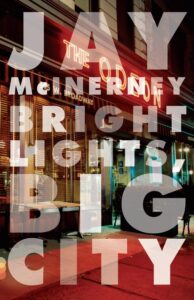
Bright Lights Big City – Jay McInerney
I never read this, as it came out just a couple years before I would have been interested in it. I remember when the movie came out and people were shocked the Michael J. Fox took the title role, it being very different than the Alex P. Keaton and Marty McFly we knew and loved. I think because of all that negative publicity, I never saw the movie either. Or at least not the whole thing.
I was expecting an exposé-like novel of how the young and rich live in New York, maybe an American Psycho without all the murders. It was indeed a critique of that era. However, rather than being a broad strokes take, it was much more dialed into the life of Jamie Conway and has far more in common with The Catcher In The Rye than that swath of books about the debauchery of the Eighties. The whole dissatisfied loaner who doesn’t fit into the world he lives in thing.
Because Conway does little to engender sympathy or interest, I found the book to be a bit dry and very dated. As we’ll see in the next entry, sometimes a book’s impact is very different when you read it 40 years after its release.
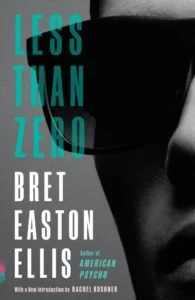
Less Than Zero – Brett Easton Ellis
I read Ellis’ The Shards three years ago and absolutely hated it. However, Less Than Zero and Bright Lights Big City always go together in my head, so I wanted to read them close to each other.
I wish I had skipped this one. It is very much like a junior varsity Shards. Ellis tells the story of bored, rich, addicted kids in LA over a college Christmas break. They don’t do anything of note, other than complain about having nothing to do. There are lots of drugs and alcohol. Sex with neither emotional ties nor, it seems, any excitement. Genuinely horrible people who have no redeeming qualities but will stumble into careers because of their parents. Thank goodness this was much shorter than The Shards so I didn’t waste a week getting through it.
I can see how both of these novels made a bigger impact upon their release. They were telling unexpected stories of characters who, because of their privilege, you would expect to have full, interesting, meaningful lives. Yet they stumble through these vapid worlds where nothing ever happens except the occasional overdose. However, four decades later, these stories aren’t fresh or compelling. And they weren’t written to be cautionary tales, so they lack impact in that way.
I would not recommend these to readers young or old in the 2020s. The only significance in reading them now is to try to reverse engineer why they made waves when they were first released.
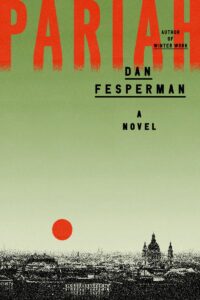
Pariah – Dan Fesperman
Sometimes I have issues when novels have direct references to modern politics. Those ties can bring in elements of what is in the news that distract from the story. There are definite ties in this book to our current political moment, but they are just light enough that they don’t get in the way.
Hal Knight, a disgraced comedian, actor, and congressman[1] is approached by representatives of the Eastern European nation of Bolrovia and offered a sort of refuge after he has fled the US when video of him mistreating an actress emerges. Turns out the authoritarian leader of Bolrovia is a huge fan of Knight’s movies. In fact, he used them to learn English. It doesn’t matter that Knight’s California liberalism does not match the leader’s right wing views; the dictator wants Knight to start a new life in his country.
However, the CIA knew this approach was coming and got to Knight just before the Bolrovian agents. With gentle prodding, they recruit Knight to work on their behalf while in Bolrovia.
Turns out being an actor and improv comedian is pretty good training for being a spy! Knight is quick on his feet and has an instinct for saying the right thing in tricky situations.
His odd relationship with the dictator is going just fine until he discovers ties between the leader, a group of right wing Americans, and the Russians. Soon Knight is running for his life in an attempt both to escape and get word of the conspiracy back to Washington.
Some of it is a little far-fetched, and we never get a clear idea of exactly what it is Knight has uncovered. As a page turner, it was just fine.
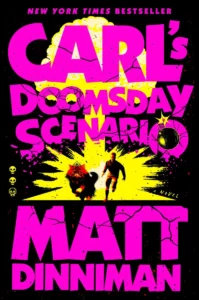
Carl’s Doomsday Scenario – Matt Dinniman
Now for the spring break books. I picked them well, as each was a pleasing vacation read.
This is book two in Dinniman’s Dungeon Crawler Carl series, where the world has been destroyed by aliens and all the survivors funneled into an intergalactic reality TV program where they fight through a real life D&D-style dungeon for survival.
Carl and his ex-girlfriend’s cat Princess Donut have advanced to level three. They are among the most popular and successful crawlers in the dungeon, amassing great powers and followers on social media. However, in this episode they are focused on a side quest I’m not sure made complete sense in the larger context of the series. Maybe it will as I get deeper into them. It was still a lot of fun.
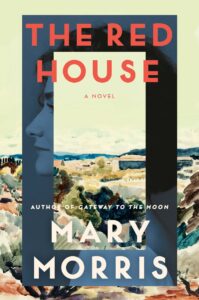
The Red House – Mary Morris
It seems like I’ve read a variation on this book’s theme – an American woman with Italian roots returns to her ancestral homeland to uncover the truth about her family before they came to the US – at least a couple times before. Most recently Jo Piazza’s The Sicilian Inheritance, which I thought was quite good. This was even better.
Here, Laura is the American in question. Just after 9/11 her marriage is on the rocks and her career unfulfilling. On a whim she decides to go to Italy, to see if anyone there has come across her mother, who disappeared from their New Jersey home 30 years earlier and was never seen again. Eventually Laura meets a man who knew her mother during World War II. In fact, he had a rather large crush on her and helped her when she was in need. Through him Laura discovers the truth of where her family came from, what they experienced during the war, how her mother fought to keep herself and her brother alive in the war’s aftermath, as well as clues to why she disappeared in 1972.
This was a deeply moving story about the choices we make in extreme circumstances. It is also a warning that sometimes the actions that keep you alive in the moment place a weight upon you that you can never escape.
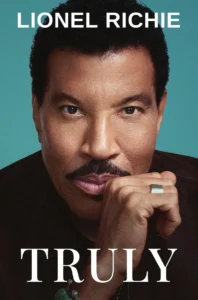
Truly – Lionel Richie
While I liked Richie’s biggest hits in the early Eighties, I’ve not retained that fondness as I’ve gotten older. When his memoir came out, I read multiple reviews that suggested it was highly entertaining even for people who did not like his music. That was a pretty fair assessment.
Richie runs through his life and career with terrific verve, sharing the highs and many of the lows. Anymore I view all memoirs of famous people as more self-serving than illuminating. This threads that line nicely. If you hate Lionel it might come off as too much. For anyone who is a casual fan or more, it is a really fun read.
Abandoned Book
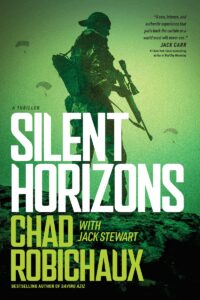
Silent Horizons – Chad Robichaux
As much as I enjoy novels that revolve around crime, action, and espionage, I occasionally run into one that is just a little too gung ho for my tastes. When I dip into the more militarist side of that world, I stick to recommendations from Steve Donoghue, who is even further left politically than I am. I figure a book about soldiers has to be good if he recommends it. Generally that’s been wise council.
This one, though? Yeesh. I got about 50 pages in and was struggling. When Robichaux described a sniper rifle as being designed to eliminate “enemies of freedom,” I had to pull the plug. Forgive me for hating the troops or whatever.
- Quite a combo, but in 2026 America it makes perfect sense. ↩