Reader’s Notebook, 8/12/26
I’m spending my morning in a dentist’s waiting room while C gets the first of two crowns. What a way to wrap up her summer!
With time to kill I figured I’d go ahead and do my next RN entry based on a single book. Fortunately it gave me a lot to think about and then share with you.
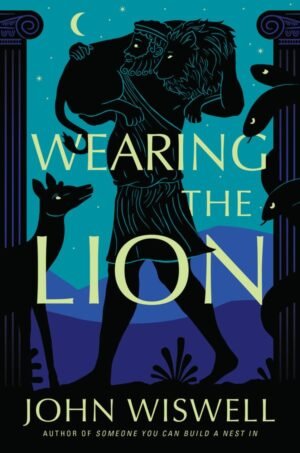
Wearing The Lion – John Wiswell
This has been on my To Read list for several months. The summer of The Odyssey seemed like a good time to tackle it, a re-imagining of the ancient Greek tale of Heracles.1 When I say re-imagining I don’t mean Wiswell just took the old texts and translated them into modern language. No, he completely revamped the story, taking a fresh look at its meaning and changing how we consider one of history’s great heroes.
The book begins with a bang. In the first sentence, Hera, the queen of the Greek Olympians, refers to King of the Gods Zeus as her “dipshit husband.” She never stops calling him that for the entire book. I laughed every time. Hera is pissed that Zeus has run off yet again and conceived yet another child with yet another mortal woman. As this child, Heracles, grows, he comes to represent everything she resents about Zeus. She reaches a breaking point after Heracles has started his own family. She imposes a state of madness on Heracles with the hope that he will kill himself during the fit. However, her gambit backfires when he, instead, kills his three sons.
In an effort to learn which god caused his fit, Heracles goes on a quest, which eventually leads him to a king who tells him if he completes 10 great labors, the truth will be revealed.
In the classic stories, Heracles goes on quite the killing and stealing spree. It’s a lot so you can review the details here.
As the Greeks told it, Heracles was this massively powerful and resourceful half-human/half-god for whom these tasks were not terribly difficult. It was more about going on adventures and doing cool things as he proved his worth. He often acts in a state of blind rage. He’s like a 1990s action hero, murdering with little remorse as he attempts to learn who forced him to kill his own offspring.
Wiswell completely flips this.
His Heracles is a thoughtful, sensitive man.2 He mourns his children, and genuinely wants to know what god sent him on this path. But he also does not see the need for other creatures to die needlessly in the process. Rather than kill the lion, he tames it, using his great strength to wear it down until it basically becomes his pet cat. He doesn’t kill the hydra, but rather chops off and cauterizes eight heads to keep them from regenerating, leaving a rather sassy snake in its place. And so on. Each step along the path Wiswell takes him on, Heracles shows his humanity and builds a new family to replace the one he destroyed. He is willing to use violence to get closer to the answer he needs, but only kills when absolutely necessary. By the end he is surrounded by a team of magical beings who are loyal to him for sparing their lives and provide as much emotional counsel to him as physical support.
Wiswell does stray from the classic story. A few of Heracles’ labors are glossed over, combined with others, or even skipped. Obviously his Heracles’ core nature is very different than the mythical one we learned about in sixth grade. This probably drives some people nuts.3 As with the manufactured and performative outcry about Christopher Nolan’s adjustments to The Odyssey, these are misguided. Ancient Greek tales are myths; they did not really happen. They began as oral tales, passed down, built and re-built, over generations. We know that the story of Heracles changed over the years in ancient times. Some of the stories don’t line up with each other at all. Ancient heroes were molded and massaged to fit each re-telling’s needs. That makes the liberties Wiswell took completely appropriate. Not terribly different from modern comics, where our heroes can live many radically different lives if they remain in print for decades.
It was funny to skim user reviews on Goodreads after finishing the book. Wearing The Lion was rather polarizing. Some folks did not like how Wiswell updated the language to make it hyper-modern. One user was upset that he made his gods curse so often, which made me laugh. Fictional ancient gods dropping f-bombs pushed this person over the edge. Others did not like how he much he adjusted the core parts of the story. Then others were excited about how he did more than slap a new coat of literary paint on an ancient tale.
I was definitely with this second camp. I really enjoyed the book. It made me laugh throughout. As I am not Greek nor a Defender of Western Culture, I wasn’t bothered by the big changes Wiswell made to the story. In fact, I liked his Heracles a lot more than the cold blooded killer of the stories I read when I was 12. His hero was much more relatable to us mere mortals as he lived with his grief and remorse and self-loathing while opening his heart to new, unexpected friends. The story touched me as much as it made me laugh.
A huge component of Wiswell’s (re-)telling is that grief and the many different ways it can affect us. We search for answers. We accept or distribute blame. We repress it or let it burn with an intensity that ruins the rest of our lives. It closes doors in established relationships while opening other doors to new ones. Grief is one complex motherfucker.
Heracles has this immense grief for killing his children, and wants to understand who caused it and why it was necessary. Had he done something to anger the gods that caused it? Was he flawed because of his half-human, half-deity parenting? He just wants answers.
Hera, too, was overwhelmed by grief. In her case because she let the complexities of her marriage anger her to the point where she caused a mortal to kill his own children. She spends the book trying to understand how she could have been so weak, how she can take responsibility for her actions, and what she can do to make her life better so that she never makes such a horrific mistake again.
To the ancient Greeks, the stories we call myths today were foundational to their culture. They helped create common social norms and a shared history for a newly united society that grew from separate, independent city states.
To us, they are interesting insights into how the ancient Greeks lived. It was upon these stories that, for centuries, we developed our own literature, theater, and culture. To act like they were anything more than the Greeks’ version of movies, TV shows, or plays is giving them too much credit.
1. Or Hercules, if you prefer your gods to be Roman.
2. Woke alert!
3. One of them is the CEO of the company that made my car.