Car Shopping Chronicles, Season 3, Part 2
Two weeks ago, S asked when I was going to start test driving cars. I told her I would probably wait several months. Three years ago I started test driving in February and had plenty of time to pick something I liked by April. Why mess with my system?
However, one night last week I fell into a YouTube car video rabbit hole. After watching a few, I launched my handy, dandy car buying spreadsheet and made a new tab for 2027. It was during this run that I came up with my list of four cars I mentioned in season three, part one.
The next day I watched more videos, read more reviews, filled in more cells on my spreadsheet. That night I told S that I had lied to her. I wasn’t going to wait until February to test drive: I had just booked a demo drive for a Rivian R2. I figured I should figure out early whether I liked it or not. Why waste several months of research when I could edit right at the start?
She laughed at me, for many reasons.
My test drive was last Thursday. The R2 lived up to every expectation: it was terrific.
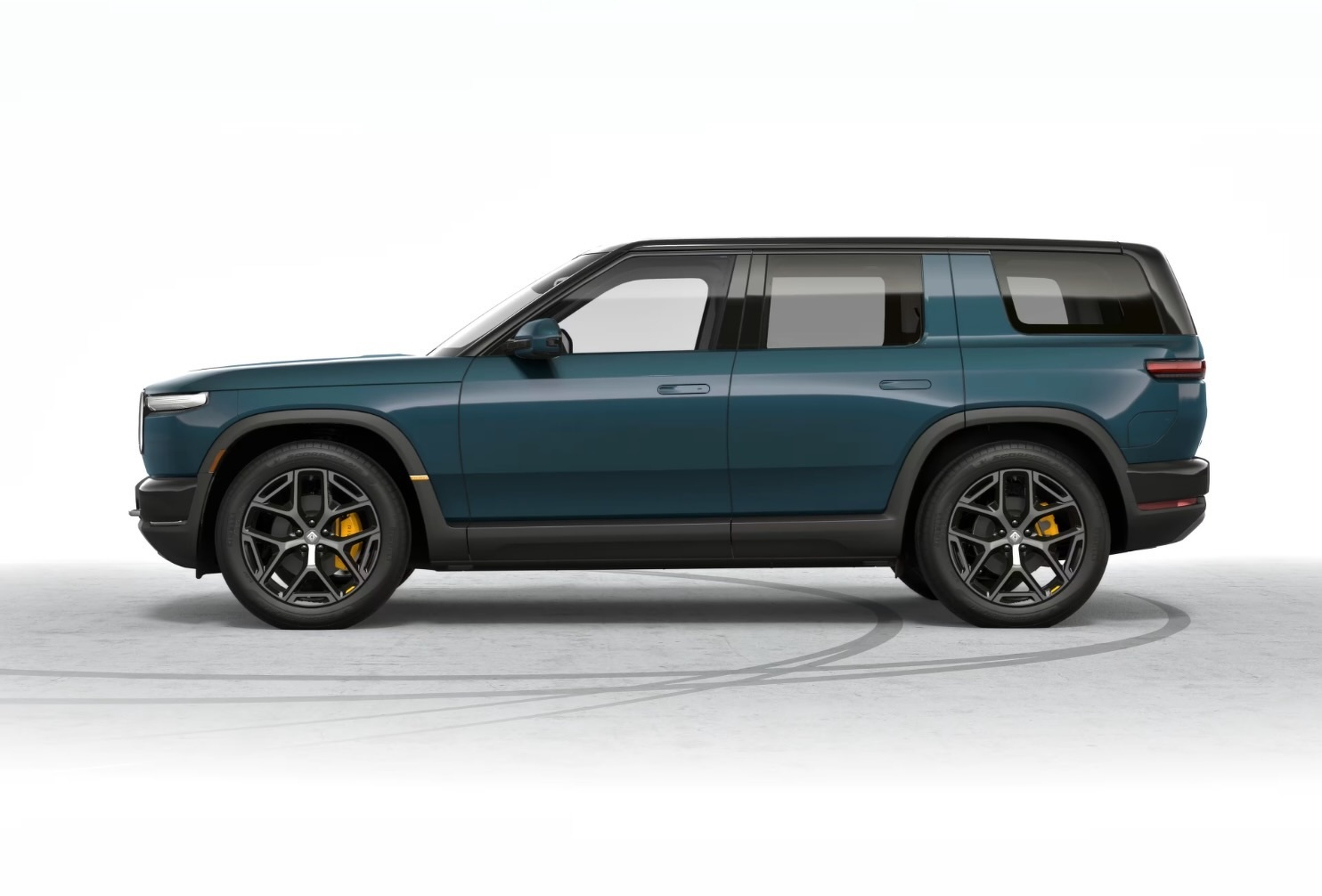
The model I drove featured the Catalina Cove exterior paint with Coastal Cloud interior. See image below. It is gorgeous. And holy moly does it ride nice. Nicer than my Tesla, for sure. I didn’t take the bumpiest of routes but it rolled through them nicely. While it does not have an air suspension like its big brother the R1S, it does have a tunable suspension. I sampled the options but was too busy evaluating everything else to notice dramatic changes.
The Performance trim, the only one currently available, delivers a mind-blowing 656 horsepower from its two motors. My Model Y checks in at 347 HP. Strangely, though, the Rivian does not give you the “throw you back into your seat like a rocket ship taking off” sensation that the Model Y does. You definitely get immediate power but there’s more of a slow build than an instant burst. I don’t think this was because the vehicle was in Demo mode or anything. It is just tuned way differently than Teslas are.
I was surprised how much I enjoyed sitting up high(-ish) again. Not that either the Model Y or my previous Audi Q5 hugged the ground. And the R2 isn’t as elevated as my old Tahoe or Suburban were. It is the Goldilocks height, at least for me, offering good views ahead without feeling like you need a ladder to get into the cabin.
Visibility is spectacular. One of my biggest complaints about my Model Y is it is flat hard to see out of the back window. In fact sight-lines in all directions are not great. Good thing there are cameras facing every direction or it would be tough to drive. S’s Telluride isn’t structured a whole lot differently than the R2, but it is much harder to see out of as well. Rivian nailed giving the driver clear views from every direction and angle before accounting for all its drive assist cameras.
The seats were crazy comfortable. I’ve struggled with my Tesla seats for nearly three years. Some days I just can’t find a pleasant position. I know most of that is because of my back issues. The Rivian seats seemed more accommodating, having less pronounced bolsters than Tesla’s. Seat comfort, however, can only be properly judged after extended use.
A huge difference between Rivian and Tesla is how Rivians provide two screens on the dash, rather than the single, large screen Telsa uses. There is the main, central screen that is standard in nearly every car anymore. A second screen lives where the traditional gauge cluster would be. It is user configurable and can show route information, what media is being played, drive mode, and other data in addition to your speed and the blind spot cameras. Tesla leaves this space blank, which even after nearly three years can be a bit jarring when driving at night. Sometimes I still think I’ve had an equipment malfunction and the lights are out.
In theory I like Rivian’s choice. In practice, I’m not as sure. My ideal steering wheel position blocks much of the screen, either with the wheel or my hands. I adjusted the wheel a couple times to view the screen better. Another detail that is best fully judged after weeks of continuous use, not a 30-minute demo drive.
Regardless, I much prefer having the blind spot cams display in the central screen, as Tesla does. I’ve grown accustomed to glancing to the right to see what those cameras display before changing lanes. In the Rivian, it felt like I never had a clear view, as they are tucked into the corner of the dash screen.1 I think it would be great if they either appeared on both screens, or you could even select which screen displayed them.
This second screen is also where the new Halo Haptic wheels come into use. They are cool, but as this was my first use of them, I wasn’t sure what they controlled or whether I could select what functions they were tied to. They feel like a cool tool that are not fully realized. I bet future software updates will make these more useful. I think with some refinement these can help bridge the gap between Rivian’s desire to be a fully-software and screen experience with most driver’s desires to have direct, physical inputs to control their vehicle.
Interacting with the screens was fine. Without previous experience with them, it wasn’t always intuitive to know what to tap, or when I needed to go down submenus to find what I was looking for. But they seemed responsive. I’m not sure that I love the design motif Rivian uses for their operating system. I give them credit, though, for trying something different rather than the ultra-spare Tesla look.
And a big fat negative for them being stubborn about including Apple CarPlay. You have two big screens! You can give Apple a portion of one of them so I can use Siri to respond to texts while driving!2
Surprisingly the most annoying thing about the drive was using the turn signals. I could’t find the happy medium where they would flash momentarily and then shut off. And, at least as configured for this drive, they continued to operate even after changing lanes. I would image there is a setting somewhere to control that. I’ve gotten spoiled by not having to worry about deactivating them after completing any change of direction.
There were probably dozens of other aspects I could have tweaked in the settings. These days you almost need a 30 minute session adjusting various settings before you actually take the car out for a spin.
Most reviews note that the sound system is subpar. My demo drive confirmed that. I streamed audio from my phone and found the audio to be far inferior to my Tesla. Cranking up the volume made it worse. It sounds thin and almost tinny. Fortunately, I don’t listen to music nearly as loudly as I used to. So if it sounds decent at moderate volume - and it seemed to - it will be fine for me.
No traditional SXM via satellite. Like Tesla, you can stream it using an app over the data connection, an experience I found to be awful when I tried it two years ago.3
The R2 is a brand new vehicle, Rivian’s first cars were released just five years ago. They are going through some of the same growing pains that Tesla finally got past in the last 3-4 years. That said, without going over the car with too fine an eye, I found it to be pretty well put together. I would imagine the demo drivers get an extra close inspection, to ensure there aren’t problematic gaps or other issues in the vehicle’s fit and finish. I hope the company is paying attention to the various online grumbles about issues in the early batches of R2s and they will be ironed out by April.
I obviously didn’t charge the vehicle. Apparently it charges slightly quicker than my Model Y. And while it earned EPA range numbers on par to Tesla’s, pretty much everyone says it is impossible to match those numbers. Real-life range falls well short of 300 miles. I have concerns about what those numbers look when winter hits and battery performance takes a hit in the cold. As long as I can make it to Cincinnati or Bloomington, range isn’t my primary concern in an EV.
In summary, I loved the R2. It rides comfortably, is fun to drive, has tons of power but manages it well, looks fantastic, and comes from a company that is known for making marked improvements to its software over time.
Beyond the quibbles already noted, there are a couple larger issues.
First, cost. R2s are not cheap. Eventually there will be a Standard model that starts at $45,000. That trim level is not coming for at least a year. The mid-tier Premium trim will not begin deliveries until next summer. On top of that, the EV tax incentives - which were designed to help American EV manufacturers compete against Chinese cars and made my Model Y so affordable - were killed for some dumb reason.4 There’s no $7500 cut to the sticker price factored into the final price anymore.
Another important financial factor: you currently cannot lease a Rivian in Indiana. There were rumors that they had to open a customer-facing location to qualify. That Indy location has been open for months and nothing has changed.5 I asked the guy helping me last week if he had any updates. He claimed they literally ask the State every week and don’t get any guidance.
All that said, I just went and looked to see how much Suburbans and Tahoes go for these days. Holy crap! Those both cost at least 35% more than they did when we leased ours! And that’s for vehicles that get crap gas mileage. Car prices be crazy, am I right?6
I have some worries about spending so much on a vehicle that is, basically, brand new. As with anything, countering all the glowing reviews are plenty of “real world” perspectives relating problems people are having with their new R2s. Again, my hope is that these are all natural functions of creating a brand new vehicle and they can be addressed before I order my theoretical R2. Not having the added safety net of a lease makes than an even scarier prospect.
There’s another large data point that keeps my brain churning: what are Rivian’s long term prospects? The financial gurus seem to believe in the company, even as it hemorrhages money. There is a trust in their engineering and manufacturing philosophies. An acknowledgment that, despite political winds to the contrary, the US market needs multiple, healthy EV manufacturers. There has been the expectation that if the company could just survive long enough for a wide release of the R2, its fortunes will improve.
The company forged a partnership with Volkswagen a couple years back, sharing their software with the VW group in exchange for a massive influx of cash. I also have serious concerns about VW’s long term health. I wonder if at some point they won’t just swallow up Rivian rather continue the partnership, shedding some of their traditional brands in the process. VW’s history with EVs has been mixed, although they newly announced ID.Tiguan that will come out in a couple years looks very promising.
Is all that enough to prevent me from buying an R2?
Maybe.
In part one I mentioned I was starting this process early because one decision was required right away. That decision was, if I want to get a Rivian this spring, I needed to jump onto the reservation list.
I chatted a bit with the Rivian rep about the reservation process. When I got home I found a site where you can plug in the date a reservation is submitted and get an estimate on when you expect delivery. October 2026 spit out a window of February to March 2027. Interesting…
A few hours later I sent Rivian one hundred (refundable) dollars to get on the list. There’s no obligation to purchase, and I can take my name off the list any time. If I still want an R2 in April but my number hasn’t come up yet, I can ask for a refund and go buy something else. If I pick another car before then, same deal. But I figured I might as well throw my name in the hat and see what happens.
That does not mean this series is over, though. Stay tuned…
-
S’s Telluride also has them in the gauge cluster. ↩︎
-
There have been persistent rumors that Tesla is close to adding CarPlay. I figure it will happen right before my lease ends. I am hoping if Tesla ever does give in, Rivian will follow soon after. ↩︎
-
Apparently Honda doesn’t offer SXM, either. That leaves VW as the only car in my list that would allow me to return to a traditional SXM setup. ↩︎
-
By a very dumb person. ↩︎
-
For some strange reason there has been a service-only center in Fort Wayne for a couple years. ↩︎
-
The average new car in the US costs $50,000 these days. Which seems insane. ↩︎