Reader’s Notebook
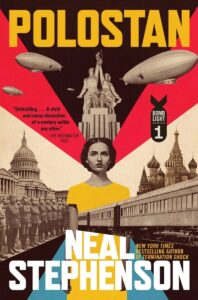
Polostan – Neal Stephenson
I’ve not read a Stephenson novel since 2010. The blurbs for this one got me interested enough to pick one up again.
This book, which kicks off a new series, takes place primarily in the 1920s and 1930s, flipping between the Soviet Union and US. At the heart of it is Dawn/Aurora, a young woman born in St. Petersburg, primarily raised in Montana, but who eventually flees back to the USSR after her father is killed in an attack on World War I veterans by a fascist wing of the US Army.
Dawn/Aurora is a remarkable woman. She is fluent in both Russian and English. Thanks to her youth in Montana, she can ride horses and is a fine polo player. Thanks to her parents’ radical politics, she learns how to do fun stuff like purchase weapons illegally and transport them across state lines. She is hunted by US agents, stumbles into scientific experiments in the east and west that are clearly leading to the development of nuclear weapons, held captive and tortured by both Americans and Russians, and manages to land on her feet in both countries. Despite her communist leanings, by the end of the book she is plotting a way to escape the USSR, setting up a very long game of a scheme with a British journalist.
I couldn’t begin to guess where book two will take her. I’ll definitely read it when it comes out, though.
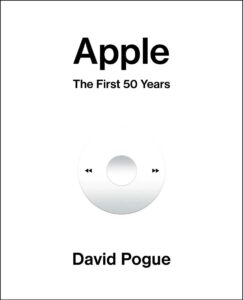
Apple: The First 50 Years – David Pogue
I’ve read tons of books about Apple, including a couple written by Pogue. Given the occasion this was written for, I felt obligated to tackle it, even if much of it would be repeated stories I’ve consumed before (although perhaps forgotten).
The book really shines in reliving the first 20 years of Apple, when it kind of accidentally stumbled into greatness then spent the better part of a decade trying to fuck everything up. Knowing where the company landed, it is fascinating to see how it worked through its growing pains.
The section of the Steve Jobs 2.0 era is also good, as that was one of the most explosive periods of growth in any company’s history. Again, even knowing where the company is today, it is almost unbelievable how good Apple was in the 2000s, from the arrival of the iMac, the explosion of the iPod, and the world-changing effects of the iPhone.
Naturally, the post-Steve Jobs section was the least interesting. Part of that is because the company isn’t as compelling anymore. It’s just a behemoth that cranks out products that get a little better each year without doing anything surprising or spectacular. It is also because we are living in that era, and it is much harder to write with distance from it. Thus that section felt like a recitation of specs and release dates without the added context the earlier eras got.
Unfortunately my library did not get the hardback version of the book at its initial release, so I went with the Kindle version. I’ve heard the hardback is a spectacular visual experience thanks to all the photos of products over the years. The grainy, greyscale, e-ink Kindle pics just can’t compare. I may have to check out the proper book at some point just to look at the photos.
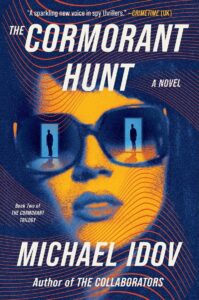
The Cormorant Hunt – Michael Idov
I read the first book in this series a year ago. That I didn’t remember much about it, nor could I connect this to it, says a lot about each book.
A rogue CIA agent, who is fleeing from at least three different agencies trying to find him. An ambitious deputy director in Langley who is the only person who believes in him. A mysterious criminal organization with funding from Russia that is killing people across Europe who might oppose them. A podcaster decrying the collapse of western culture at the expense of propping up people who aren’t white males. I’m not sure the story was super coherent. But, as I say often, at least it was a quick read.
I guess there are more to come in this series but I’m thinking this will be my last time reading one.